Structured infection defense protocols isolate high-risk transmission zones in multi-tenant commercial properties and healthcare environments to prevent facility-wide pathogen spread. Implementing verified sanitation workflows mitigates occupant health risks, reduces liability, and protects tenant retention during peak illness seasons. Comprehensive spatial management ensures high-traffic shared environments remain safe, compliant, and continuously operational.
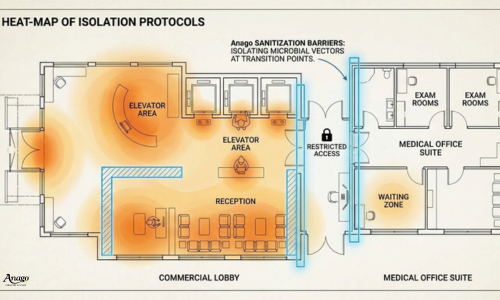
Multi-tenant buildings and healthcare spaces experience high occupant turnover, varied visitor traffic, and shared access points that accelerate cross-contamination between different populations. Without controlled sanitization boundaries, pathogens introduced in common lobbies spread quickly into private suites.
In healthcare and clinical office buildings, vulnerable patients mix with general occupants. Anago Cleaning Systems® acts as a Facility Service Partner to establish strict hygiene zones that prevent viral crossover between public spaces and clinical environments.
Industry Correction: Many property managers assume individual tenants are solely responsible for their own suite’s health and safety. However, over 70% of workplace cross-contamination originates in shared building zones like elevator lobbies, public restrooms, and central entryways managed by building operations.
Specialized protocols utilize color-coded microfiber systems, EPA-registered List N disinfectants, and strict contact-time standards to prevent cross-contamination between separate building sections. Cleaning tools are strictly segregated so microbes from restrooms are never transferred to general offices.
| Facility Zone | Specialized Defense Protocol | Target Outcome |
| Public Lobbies & Corridors | Frequent touchpoint sweeps with rapid-acting List N chemistry | Prevents incoming pathogen transfer |
| Shared Restrooms | Deep microbe sanitization and SCOF-compliant floor washes | Neutralizes high-density biological vectors |
| Clinical & Private Workspaces | Electrostatic surface wrapping with zero-residue formulation | Protects enclosed tenant populations |
Following established CDC standards, professional technicians follow methodical, unidirectional cleaning paths. Moving from clean areas to contaminated zones ensures pathogens are isolated and systematically destroyed.
Documented infection control reassures commercial tenants and healthcare providers that building management prioritizes occupant health, directly supporting higher lease renewal rates. Demonstrating proactive health defense removes tenant safety concerns during seasonal flu surges.
[Internal Data: Multi-tenant office buildings utilizing verified common-area disinfection protocols recorded a 14% higher tenant lease renewal rate over a 24-month evaluation period.]
To secure buy-in for multi-tenant or healthcare facility defense, demonstrate how common-area protection safeguards lease revenue and reduces property management risk.
Protect your occupants, preserve lease values, and maintain total facility safety. Partner with Anago to deploy tailored infection defense across your entire property portfolio.
By Darlene Bernd, Content Marketing Manager