What Are the Highest Risk Viral Hotspots in Healthcare Facilities During Fall?
 dbernd
October 27, 2026
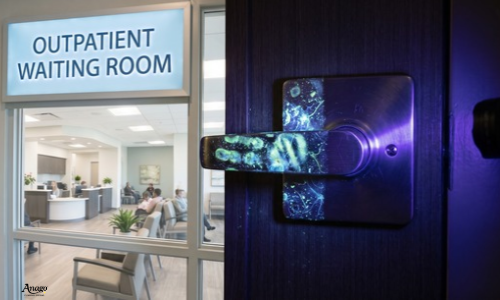
Healthcare facilities mitigate autumn illness transmission by transitioning from reactive sanitation to scheduled, EPA-registered touchpoint disinfection prior to peak viral activity.
Anago Cleaning Systems delivers targeted surface protection that lowers staff absenteeism, preserves patient throughput, and maintains strict CDC compliance across high-traffic clinical environments.
What Are the Highest Risk Viral Hotspots in Healthcare Facilities During Fall?
The highest risk viral hotspots in healthcare facilities during fall are non-clinical touchpoints, such as reception counters, check-in kiosks, door handles, elevator buttons, and break room appliances. While clinical exam rooms undergo frequent sanitation, these shared non-clinical zones experience continuous foot traffic, making them primary vectors for cross-contamination among patients and staff.
Why Does Standard Visual Cleaning Fail to Stop Viral Cross-Contamination?
Standard visual cleaning fails to stop viral cross-contamination because it focuses on removing visible dirt rather than neutralizing microscopic pathogens. Standard wiping without sufficient wet-contact time spreads viruses across surfaces rather than destroying them, leaving invisible viral reservoirs intact on high-contact equipment and door hardware.
- Pathogen Persistence: Viruses like Influenza A and Respiratory Syncytial Virus (RSV) remain infectious on non-porous hard surfaces for up to 48 hours.
- Insufficient Contact Time: Quick surface sweeps fail to maintain the manufacturer-specified wet contact time necessary for full microbial kill rates.
- Cross-Contamination Vectors: Using a single microfiber cloth across multiple rooms transfers pathogens from infected patient areas into clean administrative hubs.
How Does Proactive Touchpoint Disinfection Mitigate Healthcare Staff Absenteeism?
Proactive touchpoint disinfection mitigates healthcare staff absenteeism by stopping surface-to-hand pathogen transmission before widespread workplace exposure occurs. By targeting shared workstations, nurse call buttons, and break room surfaces with EPA-registered disinfectants, facilities reduce employee sick days and prevent sudden clinical staffing shortages.
According to CDC Infection Prevention Guidelines and clinical disinfection studies, standardized environmental surface cleaning and enhanced disinfection protocols reduce healthcare-associated pathogen transmission by up to 30%.
| Disinfection Approach | Primary Execution Focus | Average Staff Sick Days (Q3/Q4) | Operational Risk Level |
| Proactive Seasonal Defense | Scheduled EPA-registered touchpoint sanitation | Minimal disruption (1.2 days/FTE) | Low (Sustained Uptime) |
| Standard Baseline Cleaning | Surface appearance and trash removal | Moderate disruption (3.8 days/FTE) | Medium (Periodic Friction) |
| Reactive Deep Cleaning | Post-outbreak surge response | Severe disruption (6.5+ days/FTE) | High (Critical Staffing Gaps) |
What EPA and CDC Standards Must Commercial Facility Partners Meet?
Commercial facility partners must meet strict CDC infection prevention guidelines and utilize EPA-registered disinfectants proven effective against emerging viral pathogens. Additionally, facility partners must align with OSHA Bloodborne Pathogens standards and maintain documented sanitation logs to ensure compliance during regulatory audits.
- EPA List N Compliance: Authorization for chemical formulations verified to kill hard-to-neutralize viral pathogens within specified contact times.
- CDC Environmental Guidelines: Strict protocols for surface disinfection frequency, micro-fiber cross-contamination prevention, and personal protective equipment (PPE) usage.
- OSHA Workplace Safety: Full compliance with safety data sheet (SDS) management, chemical handling standards, and employee exposure controls.
What Is the Counter-Intuitive Reality of Healthcare Facility Disinfection?
The counter-intuitive reality of healthcare facility disinfection is that over-sanitizing facility floors while neglecting non-clinical touchpoints fails to reduce viral transmission rates. Pathogens are predominantly transferred at chest and hand height through touchpoints like light switches, door levers, and touchscreens rather than from floor surfaces. Real risk mitigation requires shifting chemical resources directly onto high-frequency touch surfaces.
How Do You Present This Facility Risk Strategy to Leadership for Internal Buy-In?
You present this facility risk strategy to leadership by aligning the operational metrics of each stakeholder with the business value of proactive infection prevention. While Clinical Operations focuses on infection control metrics, Finance values predictable operating costs, and HR prioritizes workforce availability.
- For Clinical Leadership: Emphasize strict adherence to CDC standards and the elimination of viral reservoirs in non-clinical zones.
- For Financial Directors: Highlight how scheduled sanitation eliminates expensive emergency call-out rates and protects patient appointment revenue.
- For HR and Risk Officers: Demonstrate how mitigating workplace illness fulfills OSHA duty-of-care expectations and preserves administrative productivity.
Frequently Asked Questions
How does touchpoint sanitation differ from routine commercial cleaning?
What disinfectants are safe for sensitive medical equipment interfaces?
How frequently should high-touch surfaces be sanitized during autumn?
What Is Your Next Step for Facility Risk Mitigation?
Protect your clinical operations, safeguard your staff, and maintain uninterrupted patient care this fall. Partner with Anago to establish a tailored, proactive facility defense program before seasonal illness spikes impact your bottom line.
Book a technical scoping call today!
By Darlene Bernd, Content Marketing Manager
