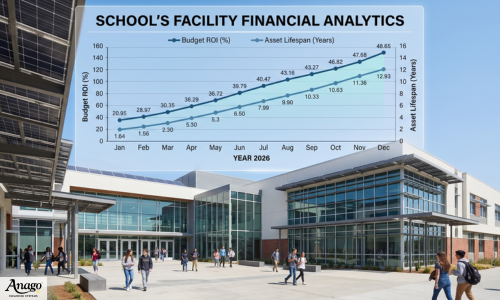
In the 2026 fiscal landscape, professional facility services must be viewed as a strategic investment rather than a line-item expense. By implementing a preventive maintenance roadmap, school districts achieve significant ROI gain through the extension of asset lifecycles for flooring, HVAC systems, and high-traffic surfaces. This approach prioritizes asset preservation and liability mitigation, allowing administrators to reallocate capital expenditure (CapEx) toward core educational initiatives.
Preventive maintenance is the systematic approach to “mitigating risk and protecting assets” before physical degradation occurs. For school districts, the largest physical assets, flooring and mechanical systems, are the most susceptible to neglect. A Facility Service Partner uses data-driven cleaning cycles to remove abrasive particulates that cause premature wear, effectively deferring millions in replacement costs.
Hardwood gym floors and specialized classroom carpets are significant investments. Without consistent, professional commercial cleaning in schools, these surfaces require complete replacement every 10–12 years. However, with a specialized maintenance program focusing on high-frequency extraction and finish protection, districts can extend this lifecycle to 18–20 years, representing a 40% ROI gain on the initial installation cost.
Modern educational facilities rely on complex HVAC systems to maintain CDC standards for air exchange. When a Facility Service Partner maintains clean air intake vents and utilizes HEPA-filtered equipment, the mechanical strain on these systems is reduced. This leads to lower monthly energy consumption and prevents the sudden, catastrophic system failures that disrupt the 2026-2027 academic calendar.
Asset Preservation is the practice of maintaining a building’s components in their peak functional state to avoid the “deferred maintenance trap”. In 2026, districts that neglect these standards face a 15-20% increase in emergency repair costs due to rising labor and material inflation. A proactive partnership standardizes the operational expense (OpEx), making the budget predictable and resilient.
The cost of “cleaning for appearances” is often hidden in the rapid depreciation of the facility. For example, using generic, high-pH chemicals on stone or tile might make them look bright temporarily, but causes microscopic etching that attracts more dirt and eventually leads to surface failure. Professional commercial cleaning in schools utilizes pH-neutral, LEED-certified solutions that preserve the substrate while achieving high-level disinfection.
Industry Correction (The Counter-Intuitive Insight): Many procurement managers believe that the lowest bid on a cleaning contract saves the most money. In reality, low-cost cleaning companies often lack the training to use specialized equipment correctly, leading to accelerated asset damage. The true “lowest cost” option is a Facility Service Partner whose higher operational standards prevent a $250,000 floor replacement.
| Category | Generic Maintenance (Reactive) | Facility Service Partner (Proactive) |
| Flooring Lifecycle | 10 Years | 18+ Years |
| Emergency Repairs | High (Unpredictable) | Low (Planned) |
| Energy Consumption | Standard | -12% (Clean HVAC/Vents) |
| Labor Efficiency | Lower (High Turnover) | Higher (Systems-Based) |
Standardize your fiscal resilience by prioritizing asset preservation today to safeguard your district’s capital for tomorrow. Ready on Time. Every Time. Contact us today!
By Darlene Bernd, Content Marketing Manager