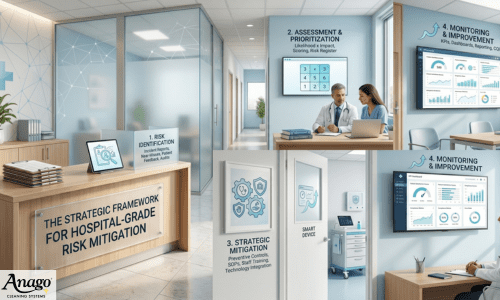
Hospital-grade cleaning is a critical clinical intervention designed to mitigate pathogenic risk and protect high-value medical assets. By implementing standardized Environmental Services (EVS) protocols (including the use of EPA-registered disinfectants and terminal cleaning techniques), health care facilities can achieve measurable gains in liability reduction and ROI while ensuring 2026-level compliance with CDC and OSHA standards.
In any health care landscape, the distinction between “janitorial services” and “clinical risk mitigation” has never been more vital. As we move into 2026, health care facility managers face increased scrutiny regarding Health Care-Associated Infections (HAIs) and the longevity of sensitive diagnostic equipment. A professional Facility Service Partner does not just “clean” a space. They provide a defensive barrier against microbial threats that compromise patient safety and organizational reputation.
Standardized protocols involve high-level disinfection targets, specifically focusing on high-touch surfaces that serve as vectors for cross-contamination. This proactive approach standardizes the environment, ensuring that every square foot of your medical office or facility is maintained to a surgical standard.
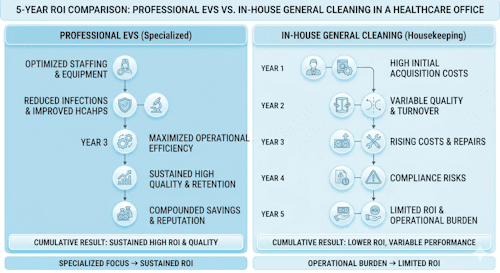
Environmental Services (EVS) refers to a specialized subset of facility management focused on maintaining clinical environments to prevent the spread of pathogens. Unlike standard commercial cleaning, EVS requires a deep understanding of dwell times, chemical compatibility, and the specific requirements of EPA-registered disinfectants.
In a medical office building, EVS integrates the science of microbiology with operational efficiency. This ensures that the facility remains compliant with CDC standards and Joint Commission requirements, shielding the organization from potential legal liabilities and regulatory fines.
Medical technology represents a significant capital expenditure. Improper cleaning techniques, such as using abrasive chemicals on touchscreens or high-frequency sensors, can lead to premature equipment failure.
By partnering with a Facility Service Partner that understands “Asset Preservation,” you mitigate the risk of accidental damage. Anago experts use specific microfiber technologies and non-corrosive, hospital-grade solutions that extend the lifecycle of your diagnostic tools, representing a direct gain in ROI over a 5-year equipment depreciation cycle.
| Feature | Standard Janitorial | Anago Hospital-Grade EVS | ROI/Risk Impact |
| Disinfectant Grade | Consumer/General | EPA-Registered (List N) | Pathogen elimination |
| Staff Training | General | Biohazard & Bloodborne Pathogen | OSHA Compliance |
| Asset Protection | Generic chemicals | Equipment-safe protocols | Extends asset life |
| Verification | Visual check | ATP Testing/Fluorescent marking | Liability mitigation |
A common industry error is the “Aesthetic Bias” – the belief that a facility that smells like bleach is safe. In reality, the overuse of strong odors often masks poor mechanical cleaning techniques.
Modern hospital-grade protocols prioritize “Bio-Load Reduction” over scents. Real safety is measured through ATP bioluminescence testing, not olfaction. True disinfection is invisible; if you can smell the chemicals, the ventilation or application method is likely non-compliant with 2026 LEED indoor air quality standards.
Terminal cleaning is the intense disinfection of a clinical room following a patient’s discharge or before a surgical procedure. This process is exhaustive, covering:
Standardizing this process ensures that the “Chain of Infection” is broken, protecting your next patient and your staff.
Internal Buy-in: How to Present This to Your Leadership
When advocating for a shift to a professional Facility Service Partner, it’s essential to tailor the message to specific stakeholders:
To further explore our specialized methodologies, please visit our core service pillars:
Protect your patients, your staff, and your medical assets. Book a free facility consultation today to see how our medical clients are served.
By Darlene Bernd, Content Marketing Manager