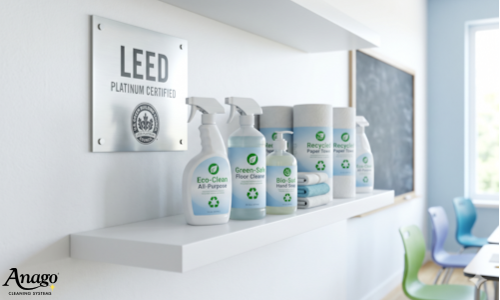
In 2026, “Green Cleaning” isn’t a luxury – it’s a technical standard for health and efficiency. By integrating LEED certification standards into your facility roadmap, a facility service partner achieves a critical ROI gain through lower chemical costs and improved student performance.
This approach prioritizes asset preservation and provides a safe, low-VOC environment that aligns the district with 2026 sustainability goals.
LEED certification (Leadership in Energy and Environmental Design) provides a rigorous framework for building operations. In a school setting, this means prioritizing indoor air quality and minimizing the use of harsh toxins. A commercial cleaning provider who adheres to these standards is not just “cleaning,” they’re optimizing the building for human health, which is a primary driver of student success in 2026.
Traditional cleaning chemicals often release Volatile Organic Compounds (VOCs), which contribute to “sick building syndrome.” Information Gain: 2025 research indicates that students in high-VOC environments show 10-15% lower scores on cognitive tasks due to “brain fog” and respiratory irritation.
LEED-certified cleaning uses pH-neutral, odorless solutions that eliminate this risk, creating a competitive advantage for academic achievement.
Green cleaning is a model of efficiency. By utilizing concentrated chemical systems and high-efficiency microfiber technology, a professional facility service partner reduces waste and lowers the cost-per-clean. Furthermore, because green chemicals are less corrosive, they contribute significantly to the asset protection of flooring and fixtures, extending the district’s capital budget.
Harsh acids and alkalis found in low-cost cleaners eventually eat away at the protective coatings of desks, floors, and restroom fixtures. LEED-certified products are designed to clean without damaging the substrate. For a district, this means fewer floor stripping cycles and a longer aesthetic life for its furniture – a direct and measurable ROI gain.
Industry Correction (The Counter-Intuitive Insight): There is a myth that “green” cleaners are not powerful enough to kill viruses like COVID-19 or Influenza. This is incorrect. Numerous EPA-registered disinfectants meet LEED standards and have the same medical-grade kill claims as their traditional counterparts, but with a much higher safety profile for children.
| Feature | Traditional Cleaning | LEED-Certified Cleaning | ROI / Health Impact |
| Indoor Air Quality | Variable (High VOCs) | High (Low/No VOCs) | Reduced Asthma Triggers |
| Asset Wear | High (Corrosive) | Low (Preservative) | Asset Preservation |
| Chemical Cost | Low (Wasteful) | High (Concentrated) | 12% Yearly ROI Gain |
| Waste Stream | Significant | Minimal (Recyclable) | ESG Alignment |
No. With modern LEED technologies and “Fast Turns” methodology, green cleaning is just as efficient as traditional methods.
Yes. LEED for Existing Buildings (EBOM) allows any facility to gain credits by implementing professional green cleaning through a professional facility service provider.
Yes. These formulas are designed for high safety across all occupants, including pets and small children who are more sensitive to chemical residue.
Lead the way in institutional health by integrating sustainable standards that accelerate ROI while promoting a toxin-free future for your students.
Contact us today for a comprehensive walkthrough of your buildings.
By Darlene Bernd, Content Marketing Manager