Winter Break School Sanitation: Classroom Deep Cleans and Facility Resets
 dbernd
November 17, 2026
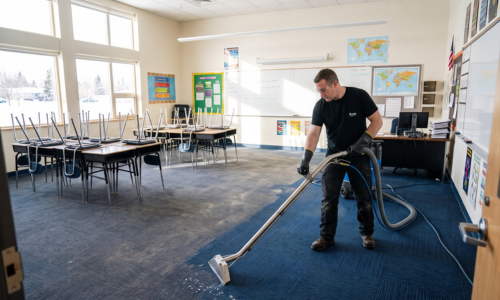
The two-week winter break presents an essential, empty-facility window for K-12 school districts and higher-education campuses. Months of intensive student use load educational spaces with high viral bioburden, ground-in carpet particulates, and heavily scuffed gymnasium flooring.
Bypassing deep sanitation during this operational recess risks high student absenteeism from winter viral transmission in Q1 and accelerates physical asset degradation.
Implementing an intensive winter break sanitation blueprint, incorporating CRI-certified hot water carpet extraction, athletic wood floor conditioning, and broad-spectrum classroom disinfection, safeguards student health, restores instructional facilities, and protects district capital.
What are the operational priorities for educational cleaning during winter break?
Winter break cleaning priorities focus on comprehensive, labor-intensive deep sanitation tasks that cannot be executed while students and faculty are present. This includes restorative carpet extraction across classrooms, complete athletic floor recoating, deep mechanical restroom descaling, and high-level disinfection targeting high-contact touchpoints to suppress seasonal outbreaks of Norovirus, Influenza, and Strep.
Why is winter break the critical window for educational floor restoration?
Classrooms, lecture halls, and corridors accumulate substantial moisture, abrasive road gravel, and chemical de-icing salts during early winter. Left in carpet fibers, crystalline salts dry into sharp, jagged micro-crystals that slice through nylon and polypropylene pile under student foot traffic, permanently fraying the backing and requiring early capital carpet replacement.
Similarly, hardwood gymnasium floors experience heavy seasonal use from physical education and school athletics. Perspiration, body oils, and street dust contaminate the floor’s topcoat, degrading the slip resistance required for athlete safety. Executing a clean-and-recoat process during winter break provides the mandatory 48-to-72-hour cure time needed for water-based finishes, establishing an ANSI-compliant, high-traction athletic surface for Q1 sports schedules without taking the gym out of service.
The Counter-Intuitive Insight: Over-Diluting Quat Disinfectants Can Foster Resilient Pathogens
School custodians operating under tight budgets often stretch chemical concentrates by adding excess water to automated dilution dispensers.
Under-diluting quaternary ammonium compounds (“quats”) drops the chemical concentration below the minimum lethal threshold (typically 400 to 800 PPM active quat). Instead of eradicating dangerous pathogens, sub-lethal dosing fosters chemical resistance in persistent bacteria and fails to break down the resilient protein capsids of winter viruses. Chemical dilution systems must be audited and verified using chemical test strips prior to deep-cleaning execution.
What is the multi-stage classroom and facility winter break checklist?
Maximizing a two-week administrative shutdown requires a structured, multi-zone cleaning schedule that prevents cross-contamination across classrooms, administration suites, and athletic zones.
- Classroom Furniture Evacuation and Stacking: Invert all student desks and chairs, systematically relocating them to perimeter walls to expose the entire floor substrate for uninterrupted mechanical cleaning.
- HEPA Extraction of Upholstered and Soft Surfaces: Vacuum all textiles, area rugs, and student seating using certified CRI Seal of Approval HEPA systems to capture fine allergens and dander without exhausting particulates back into the indoor air envelope.
- Restorative Hot Water Extraction (Carpet): Precondition carpeted floors with an alkaline emulsifier to break down greasy soil matrices, followed by a hot-water rinse (minimum 180°F at the manifold) to extract suspended contaminants and neutralize pH.
- Restroom Acid Descaling and Fixture Sanitization: Apply a foaming acid cleaner to porcelain urinals, toilets, and surrounding ceramic tile grout lines to dissolve hard water scale, uric acid salts, and bacterial reservoirs, finishing with an EPA-registered hospital disinfectant.
- Classroom High-Touch Disinfection Sweeps: Disinfect all horizontal surfaces, door handles, interactive whiteboards, computer keyboards, and locker latches using an EPA-registered disinfectant, ensuring strict compliance with required wet-contact dwell times.
How should educational facilities balance cleaning chemistry with indoor air quality (IAQ)?
Educational institutions must protect student and teacher health by selecting cleaning chemistries that achieve verifiable antimicrobial pathogen elimination without off-gassing volatile organic compounds (VOCs) that trigger asthma and respiratory irritation.
| Operational Zone | Conventional Chemical Used | Green Seal / LEED Alternative | Health & Environmental Benefit | Disinfection / Cleaning Target |
| General Classrooms | Chlorine Bleach / Pine Oils | Hydrogen Peroxide Cleaner (GS-37) | Non-sensitizing; zero toxic residue; no asthma triggers | Broad-spectrum virucidal (Influenza, RSV, Rhinovirus) |
| High School Science Labs | Solvent-based harsh degreasers | Bio-enzymatic Surfactant Blends | Low-VOC; non-flammable; safe on phenolic resin tops | Emulsifies organic residues and chemical stains |
| Campus Athletic Lockers | Concentrated Phenolic cleaners | Accelerated Hydrogen Peroxide (AHP) | Eliminates strong odors; high sporicidal efficacy | Eradicates MRSA, athlete’s foot fungus (T. mentagrophytes) |
| Main Corridor Flooring | High-VOC solvent floor strippers | Low-Odor Floor Stripper (Green Seal) | Prevents VOC migration through HVAC air-handling zones | Strips worn wax coats without irritating staff |
| Restroom Infrastructure | Hydrochloric acid descalers | Organic Acid / Phosphoric Blends | Non-fuming; protects chrome fixtures and indoor air | Eliminates uric scale and biofilm deposits |
Partnering with professional educational commercial cleaning services ensures school districts deploy balanced cleaning systems that meet rigorous LEED v4.1 for Operations and Maintenance (O&M) and EPA Safer Choice criteria.
Internal Buy-in: How to Present This to Your Leadership
Securing approval for contract cleaning supplements from school boards, superintendents, and business administrators requires highlighting academic performance and funding:
- For the School Board & Superintendent: Frame winter deep cleaning as an investment in student attendance and academic performance. Average Daily Attendance (ADA) metrics directly dictate state funding distributions. Reducing respiratory and gastrointestinal illness outbreaks in Q1 prevents student absenteeism, preserving educational outcomes and funding allocations.
- For the District Facilities Director: Emphasize crew capacity and deferred maintenance catch-up. Internal custodial teams often face seasonal holiday leaves, leaving them understaffed to tackle heavy carpet extraction and gym floor recoating alone. Partnering with a specialized provider offloads mechanical work and ensures tasks are completed before school resumes.
- For the Business Administrator / CFO: Present restorative deep cleaning as a life-cycle cost management strategy. Extending carpet service life by three to five years through routine, certified hot-water extraction saves the district hundreds of thousands of dollars in capital replacement outlays.
Frequently Asked Questions
Why is hot-water extraction mandatory over carpet shampooing in school facilities?
How does proper cleaning reduce asthma-related student absenteeism?
Can water-based gym floor finishes cure sufficiently during the two-week winter break?
What is the ideal protocol for disinfecting sensitive classroom electronic devices?
Prepare Your Educational Campuses for a Healthy, High-Performance Q1
Do not let winter viruses and facility wear disrupt your academic district's mission. Book an Educational Facility Winter Assessment to lock in your winter break deep cleaning, carpet extraction, and floor restoration crews before holiday scheduling closes.
By Darlene Bernd, Content Marketing Manager
