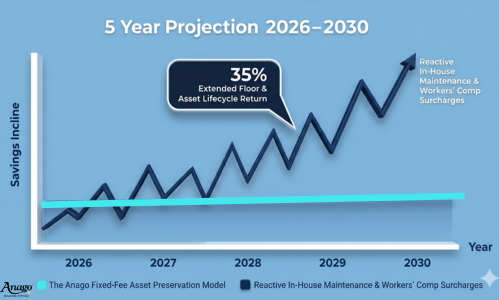
Strategic commercial cleaning outsourcing shifts unpredictable capital and operational expenditures into a fixed, high-performance delivery model that maximizes institutional ROI gain. By deploying standardized risk-mitigation protocols, educational facility administrators protect high-value physical assets and eliminate costly compliance infractions ahead of the upcoming school year.
Too often, school business administrators categorize janitorial services as a pure sunk cost. In reality, sub-standard environmental maintenance accelerates the depreciation of facilities infrastructure, leading to premature capital expenditure outlays for flooring, HVAC components, and structural fixtures that could have been preserved through specialized care.
When facility upkeep is neglected or managed by untrained staff, asset lifecycles contract drastically. For example, failing to protect commercial floor coverings can force a premature replacement cycle, draining capital reserves that could otherwise fund educational technology or faculty retention programs.
In-house operations incur significant hidden costs, including workers’ compensation insurance, payroll administration, specialized equipment depreciation, and recurring training expenses. Shifting to an outsourced paradigm internalizes these expenses into a single, predictable line item managed entirely by the partner.
Many purchasing departments mandate buying lowest-cost bulk chemicals to satisfy immediate budget constraints. However, unstandardized, low-grade cleaning products damage premium surfaces over time, stripping commercial finishes and eroding protective sealants. Investing in high-performance, calibrated chemical distribution systems deployed by expert facility service partners prevents asset degradation and delivers long-term financial savings.
A structured environment directly protects the institutional bottom line. By executing specialized workflows that guarantee compliance with federal and state regulations, Anago Cleaning Systems helps facilities achieve measurable fiscal advantages.
| Financial Risk Vector | Legacy In-House Exposure | Outsourced Protection Model | Direct Financial Benefit |
| Slip-and-Fall Litigation | High risk due to unmonitored traction levels | Programmatic testing to meet SCOF standards | Minimizes insurance premiums and legal settlements |
| Cross-Contamination Claims | Inadequate tracking logs and variable execution | Strict adherence to CDC standards with digital verification | Establishes defense-in-depth against institutional liability |
| Chemical Mismanagement Fines | Inconsistent SDS tracking and chemical storage | 100% compliant chemical storage under OSHA guardrails | Eliminates costly regulatory non-compliance fines |
Securing board approval for outsourcing requires translating operational benefits into clear financial metrics that appeal directly to fiscal decision-makers.
Protect Your District's Capital Budget
Stop letting operational inefficiencies drain your educational fund reserves. Transform your facility maintenance from an unpredictable liability into a high-return asset preservation strategy.
Contact us today for your facility's comprehensive consultation.
By Darlene Bernd, Content Marketing Manager