High-traffic facilities such as gyms, boutique fitness studios, and personal care salons face extreme exposure to slip-and-fall litigation and biological cross-contamination.
Internal audits that focus exclusively on cosmetic presentation leave business owners vulnerable to devastating civil liability and regulatory fines. Professional commercial cleaning facility service partners mitigate these risks by strictly enforcing SCOF (Static Coefficient of Friction) floor standards, OSHA bloodborne pathogen controls, and medical-grade air filtration protocols.
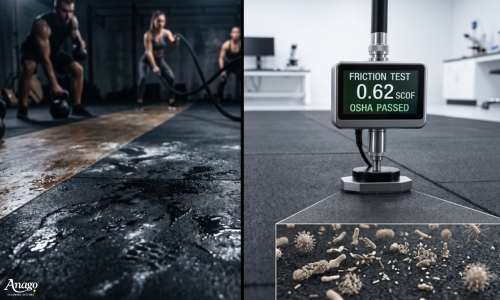
In wellness and personal care environments, improper floor care and inadequate surface disinfection create direct physical hazards. Slip-and-fall incidents account for the vast majority of commercial property liability claims, with litigation costs continuing to climb rapidly.
2026 commercial insurance risk forecasts project that slip-and-fall claims in gyms and personal care facilities will carry an average settlement cost exceeding $48,000 when floor friction documentation is absent.
Using standard mop-and-bucket methods spreads dirty water across porous floor mats and tiled surfaces, stripping away traction and distributing bacteria like MRSA or fungal pathogens across equipment.
Key Insight: Freshly mopped floors that look shiny are often at their highest hazard state. Standard floor cleaners leave a chemical film that dramatically reduces floor traction, creating immediate slip-and-fall hazards that fail ANSI/NFSI safety standards.
By engaging professional commercial cleaning facility partners, operators ensure floor maintenance meets strict SCOF standards while utilizing EPA-registered agents designed for biological risk control.
| Hazard Area | Standard Cleaning Outcome | Compliance-Level Risk Mitigation |
| Locker Room & Shower Floors | Residual soap scum; high slip risk | Certified slip-resistance treatment exceeding 0.60 SCOF |
| Fitness Equipment & Salon Chairs | Cross-contamination across users | Pathogen-neutralizing, non-corrosive EPA disinfectants |
| Indoor Air & Micro-Dust | Recirculated airborne skin cells | HEPA extraction capturing particulate matter down to 0.3 microns |
| Bloodborne Pathogen Protocols | Unregulated wipe downs | Strict adherence to OSHA bloodborne pathogen mandates |
Executing a systematic audit protocol protects both human health and financial assets across fitness and beauty facilities.
Positioning compliance-level cleaning to salon and gym owners requires connecting surface hygiene directly to revenue retention and legal risk management.
When clean is non-negotiable, protecting occupant safety becomes your strongest operational defense.
Protect Your Business from Unnecessary Claims. Don't wait for a liability claim to reveal the gaps in your facility care. Contact your local Anago office to schedule a comprehensive floor safety and compliance evaluation.
By Darlene Bernd, Content Marketing Manager