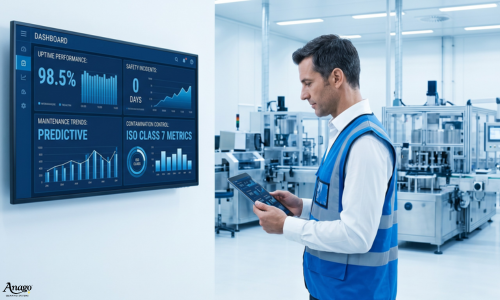
Manufacturing cleaning KPIs should measure far more than visual cleanliness. The most effective facility managers track metrics tied to uptime, safety performance, equipment reliability, compliance readiness, and total operational cost. When cleaning is treated as a measurable operational system, it becomes a driver of asset preservation and risk reduction rather than an overhead expense.
Facilities aligned with OSHA safety expectations, EPA-registered chemical protocols, and HEPA filtration standards consistently outperform peers in uptime, maintenance costs, and workforce safety outcomes.
Most manufacturing sites still evaluate commercial cleaning through inspections, complaints, or general housekeeping scores. That approach is insufficient in production environments where contamination directly impacts machinery, throughput, and safety.
Manufacturing environments operate under constraints defined by OSHA workplace safety expectations, CDC hygiene guidance where applicable, and ISO-driven quality standards. These require measurable operational outcomes, not subjective visual assessments.
A visually clean manufacturing floor can still be operationally high-risk if dust accumulation, particulate contamination, or workflow obstruction is not measured and controlled.
Manufacturing cleaning KPIs should directly connect facility conditions to production performance.
1. Equipment Downtime Linked to Environmental Conditions
This KPI measures production interruptions caused by contamination, dust, or cleaning deficiencies.
Poor environmental control affects:
Why it matters: Even minor particulate buildup can create cascading industrial equipment inefficiencies that reduce output.
KPI formula:
Downtime hours ÷ total operating hours
Dust and debris are not cosmetic issues in manufacturing environments. They are performance inhibitors that increase wear and reduce system efficiency.
Facilities with inadequate contamination control often experience:
HEPA Filtration systems are often deployed in sensitive manufacturing environments to reduce airborne particulate loads and protect equipment integrity.
Safety performance is one of the strongest indicators of cleaning program effectiveness.
Core Safety KPIs
Occupational Safety and Health Administration compliance standards reinforce the importance of clear walkways, hazard-free floors, and controlled work environments.
Why it matters:
Poor housekeeping is a leading contributor to preventable workplace injuries.
Manufacturing productivity is often disrupted not by machinery failure, but by environmental friction.
Common inefficiencies include:
KPI: Workflow Interruption Rate
Measures how often cleaning-related conditions slow production flow.
Manufacturing facilities often operate under multiple regulatory frameworks, including:
Environmental Protection Agency standards influence chemical usage and environmental safety in facility cleaning programs.
Key Compliance KPIs
Manufacturing assets represent significant capital investment. Cleaning programs directly influence asset lifespan and performance.
Asset KPIs
Contamination control reduces mechanical stress and improves long-term reliability.
Different stakeholders interpret facility performance differently:
Operations Leaders focus on uptime and throughput
Finance focus on predictable OPEX and ROI
Safety Teams focus on OSHA compliance and risk reduction
Procurement focus on vendor accountability and scalability
Framing cleaning KPIs in operational language improves executive alignment.
Improve visibility into facility performance with a structured KPI framework built for manufacturing environments.
Explore Manufacturing Facility Cleaning Services – contact Anago today.
By Darlene Bernd, Content Marketing Manager