In 2026, school safety is a matter of rigorous technical application. By integrating HEPA-filtered air purification, EPA-registered disinfection protocols, and OSHA-compliant safety standards, a Facility Service Partner creates a multi-layered defense against pathogens. This scientific approach ensures “Information Gain” regarding microbial control, directly leading to liability mitigation and a safer environment for the entire K-12 community.
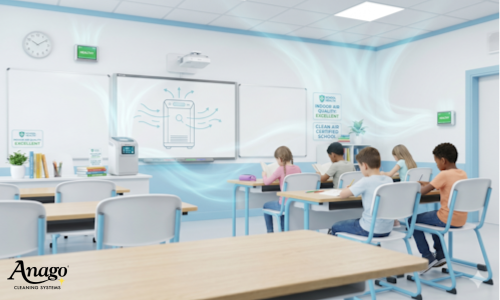
HEPA (High-Efficiency Particulate Air) technology is the gold standard for maintaining indoor air quality (IAQ). These filters are engineered to capture 99.97% of particles as small as 0.3 microns, including viruses, bacteria, and allergens that traditional vacuums simply redistribute.
For students with asthma or respiratory sensitivities, a facility service partner utilizing HEPA equipment is a critical component of their educational success.
Standard janitorial equipment often acts as a “dust pump,” taking allergens from the floor and putting them into the breathing zone. By contrast, specialized commercial cleaning in schools utilizes sealed HEPA systems that trap these contaminants. This technical distinction is vital for meeting the 2026 IAQ benchmarks set by the EPA and CDC.
Microbial control refers to the systematic reduction of the pathogen load on high-touch surfaces. This isn’t done just through cleaning, but through the precise application of EPA-registered disinfectants that have specific “kill claims” for the viruses and bacteria most common in school settings, such as Norovirus and Influenza.
Using a “spray and wipe” method is often ineffective. True safety requires adherence to the chemical’s “dwell time” – the amount of time a disinfectant must remain wet on a surface to neutralize pathogens. A facility service partner is properly educated in these technical requirements to ensure that every surface in the classroom or lab is chemically safe.
Safety isn’t just for the students – it’s for the staff. OSHA standards require strict labeling and Safety Data Sheet (SDS) management for all chemicals on campus. Professional partners manage this documentation as part of their service, ensuring the school district is always audit-ready and protected from regulatory liability.
There is a common misconception that “natural” or “DIY” cleaners (like vinegar) are sufficient for school safety. While they may be eco-friendly, they lack the EPA-registered kill claims necessary to manage an outbreak in a high-density educational environment.
Professional commercial cleaning partners use “Green” disinfectants that are both EPA-registered and LEED-certified, providing the best of both worlds.
| Defense Layer | Technology/Standard | Primary Function |
| Level 1: Air | HEPA Filtration | Captures airborne allergens and viral particles. |
| Level 2: Surface | EPA-Registered Disinfectants | Neutralizes specific pathogens on high-touch points. |
| Level 3: Protocol | CDC Standards | Directs the frequency and method of disinfection. |
| Level 4: Safety | OSHA Compliance | Protects staff and ensures regulatory documentation. |
Deploy a multi-layered defense rooted in technical excellence to ensure every student and staff member breathes easier in a scientifically safe environment.
Request a technical specification walkthrough today!
By Darlene Bernd, Content Marketing Manager