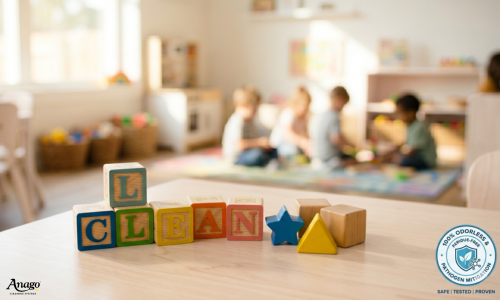
Daycare and Early Childhood Education: Protecting Our Youngest Learners


Early childhood educational facilities require specialized microbial risk mitigation to reduce rampant cross-contamination and institutional absenteeism. Implementing EPA-registered, CDC-compliant disinfection frameworks establishes baseline environmental safety that drives enrollment retention and ensures parental confidence from day one.

Why are early childhood centers uniquely vulnerable to infectious outbreaks?

Daycares and preschools function as highly concentrated vectors for infectious pathogens due to the natural behavioral patterns of young children, who frequently interact through close physical contact and shared tactile toys. Developing immune systems require a heightened level of environmental sanitation that goes far beyond basic surface appearance.

What are the real operational costs of daycare outbreaks?

When an infectious outbreak spread through a daycare facility, the consequences are immediate: student attendance drops, staff members fall ill, and revenue declines as parents are forced to stay home from work. Furthermore, a public health outbreak can severely damage a center’s reputation within the local community.

Why are standard domestic cleaning products insufficient for early education centers?

Consumer-grade cleaning products often lack the necessary chemical concentration or required dwell times to fully eliminate stubborn pathogens on childcare surfaces. Without professional application, these products can leave behind sticky chemical residues that actually attract more dirt and biological matter.

Counter-Intuitive Insight: The Hidden Risk of Fragrant Cleaners

Many childcare administrators associate strong, perfumed scents with a clean environment. In reality, heavy artificial fragrances often indicate the presence of volatile organic compounds (VOCs) that can irritate young respiratory systems and trigger allergic reactions or asthma attacks. True environmental safety relies on residue-free, odor-neutral sanitization that eliminates pathogens without polluting the indoor air.

The Pathogen Suppression Protocol for Early Childhood Facilities

Protecting vulnerable populations requires a systematic approach that neutralizes microscopic threats while preserving the integrity of classroom assets. Anago Cleaning Systems provides an advanced protection framework specifically tailored for early childhood spaces.

  1. High-Frequency Toy and Object Sanitization: Treat shared learning tools with non-toxic, rinse-free sanitizers that safely eliminate microbes on non-porous touch surfaces.
  2. Targeted Microbial Barrier Application: Deploy advanced electrostatic technology to apply EPA-registered protectants across complex surfaces, including soft play structures, carpets, and reading nooks.
  3. Sanitization of Food Preparation and Consumption Zones: Implement strict color-coded protocols to clean and sanitize food contact surfaces, completely eliminating the risk of cross-contamination from diaper changing areas.
  4. Advanced Floor Level Decontamination: Since infants and toddlers spend a significant amount of time on floor surfaces, execute deep extraction cleaning with HEPA-filtered vacuums to remove deep-seated contaminants.
  • Parental Reassurance: Grounded in the principle: “Clean Classrooms, Confident Parents,” providing visible evidence of an advanced environmental safety program drives long-term family retention.
  • Regulatory Compliance: Ensuring absolute alignment with state childcare licensing boards and CDC standards for early childhood health and safety.
  • Safety Assurance: Maintaining floor friction controls that comply with modern SCOF standards, preventing slips and trips in high-activity play areas.

Internal Buy-in: How to Present This to Your Leadership

Enacting a transition to a premium outsourced facility services partner requires aligning your proposal with the operational priorities of daycare owners and directors.

Administrative StakeholderCore Operational ConcernAnago Strategic SolutionInstitutional Impact
Daycare Owner / DirectorEnrollment retention and brand trustVisible compliance signaling and fewer closuresIncreases enrollment stability and parental peace of mind
Program CoordinatorStaff health and structural asset careSafe, automated chemical systemsReduces teacher call-outs and protects expensive educational toys
Facilities DirectorRegulatory compliance and safety auditsFull digital cleaning logs and certified techniciansGuarantees hassle-free compliance during state inspections

Frequently Asked Questions (FAQ)

Are the disinfection products used by professional partners safe for infant environments?

Yes, professional partners select botanically derived or low-toxicity disinfectants from the EPA’s least-hazardous categories. These solutions effectively eliminate dangerous pathogens while remaining completely safe for surfaces that young children interact with daily.

How does electrostatic disinfection improve safety in preschool classrooms?

Electrostatic spraying applies a positive charge to the disinfectant droplets, causing them to wrap around and uniformly coat complex surfaces (such as building blocks, chair legs, and play equipment) ensuring comprehensive coverage that manual wiping simply cannot achieve.

What steps are taken to prevent cross-contamination in diaper changing zones?

Technicians follow strict OSHA and CDC standards, utilizing distinct color-coded microfiber cloths and separate tools reserved exclusively for restroom and changing areas. This separation ensures that fecal and urinary pathogens are never transferred to classroom or dining spaces.

Don't wait for an unexpected outbreak to compromise the safety of your early childhood center. Build lasting parental trust and protect your staff with a certified environmental protection strategy.

By Darlene Bernd, Content Marketing Manager
Cookies preferences

Necessary

Necessary
Necessary cookies are absolutely essential for the website to function properly. These cookies ensure basic functionalities and security features of the website, anonymously.