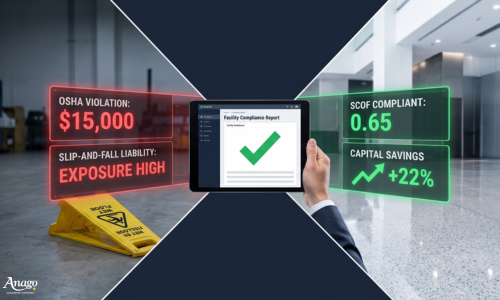
To maintain mid-year regulatory compliance and eliminate the risk of failed OSHA inspections, facility managers must transition from reactive practices to standardized environmental risk mitigation protocols. Implementing verifiable, multi-site hygiene tracking ensures continuous inspection readiness, shields organizations from punitive fines, and preserves physical infrastructure. Partnering with dedicated Facility Commercial Cleaning Partners standardizes these practices across all locations seamlessly.
Mid-year audits disrupt operations when facility managers rely on cosmetic checklists rather than systematic validation. True audit readiness demands continual compliance tracking that standardizes environmental hygiene across all footprints, eliminating surprise failures during unannounced regulatory inspections.
When unexpected regulatory inspections occur, operational vulnerabilities quickly surface. Many organizations suffer from a lack of visibility, meaning leadership cannot definitively verify whether critical protocols are being executed consistently across multiple locations. Staff turnover and variable execution by unvetted vendors often introduce gaps in compliance documentation, leaving the enterprise exposed to substantial legal and financial liabilities.
According to industry data projections for late 2026, regulatory enforcement actions are expected to rise by 14% due to updated workplace safety mandates. This shifting landscape requires automated reporting and standardized frameworks to ensure every facility remains continuously compliant.
Standardizing environmental hygiene protocols directly accelerates capital asset preservation by preventing the accelerated degradation of building materials and HVAC infrastructure. Utilizing calibrated, EPA-registered solutions within structured workflows ensures surfaces and mechanical systems are preserved rather than corroded by improper chemical applications.
When protocols are executed haphazardly, facilities risk more than just regulatory citations; they risk accelerated asset degradation. For example, using improper chemical concentrations on specialized flooring or sensitive electronic environments can ruin capital infrastructure prematurely.
By contrast, integrating a structured corporate protocol ensures that:
Operationalizing a verifiable compliance checklist requires migrating from manual logbooks to a centralized, digital tracking ecosystem that logs execution in real time. This methodology provides Compliance Officers with immutable proof of adherence to OSHA, CDC, and localized safety mandates across all corporate physical assets.
To guarantee compliance across all sites, operations directors must deploy a uniform framework. The following structured process establishes clear accountability and simplifies the verification loop during external inspections:
| Operational Focus Area | Legacy Maintenance Approach | Advanced Facility Service Partnership |
| Audit Readiness | Reactive cleaning before known inspection dates | Continuous, verifiable audit-ready state |
| Regulatory Tracking | Paper logs prone to human error or missing data | Automated, digital compliance documentation |
| Risk Exposure | High vulnerability to OSHA fines and liability claims | Proactive liability mitigation and asset protection |
| Execution Standards | Variable quality driven by local staff turnover | Standardized, cross-site algorithmic workflows |
Many facility managers believe that a visually spotless environment equates to compliance. This is an operational misconception. Daily visual cleanliness is a lagging indicator that frequently masks underlying bio-burden and non-compliance. True audit readiness requires structural protocol validation (such as ATP bioluminescence testing or verified chemical contact times) rather than superficial aesthetic checklists. Relying on visual cues alone leaves organizations exposed to surprise audit failures and environmental cross-contamination.
Securing budget approval for an advanced compliance infrastructure requires speaking the language of each corporate stakeholder. While Operations Directors value the mitigation of daily operational friction, the broader executive team looks at the decision through different lenses:
Don't let a surprise mid-year audit expose your organization to regulatory penalties or operational downtime. Schedule a technical scoping call with our franchisee specialists to standardize your environmental risk mitigation strategy.
By Darlene Bernd, Content Marketing Manager