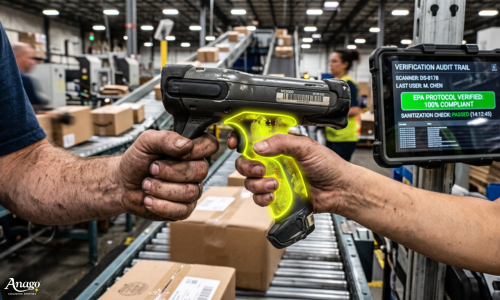
Supply chain facilities and high-traffic commercial hubs face intense regulatory scrutiny regarding environmental cleanliness and pathogen control. Meeting modern CDC standards and OSHA requirements requires documented, verifiable proof of execution across every critical facility touchpoint.
Relying on unverified verbal reports or basic visual checks leaves your operations vulnerable to audit failures and supply chain disruptions. Establishing digital chain-of-custody reporting and standardized EPA-registered disinfection protocols converts routine facility maintenance into defensible legal evidence.
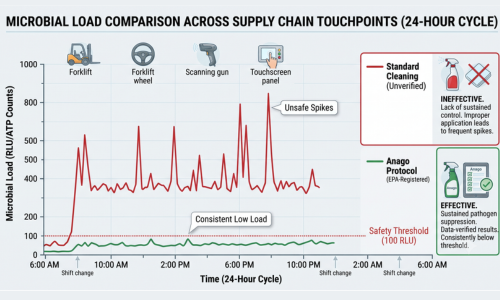
High-traffic touchpoints fail compliance audits because traditional facility maintenance treats heavy-use areas with the same frequency as low-traffic zones. Without calibrated dwell times and documented touchpoint logs, high-use surfaces quickly become vectors for rapid cross-contamination.
In distribution centers, fulfillment facilities, and multi-tenant commercial lobbies, thousands of human interactions occur daily across shared surfaces. Regulatory auditors look beyond general appearances, evaluating whether facilities maintain systemic pathogen control in high-velocity zones.
Key Insight: Rapid, frequent wiping down of high-traffic surfaces often increases microbial contamination instead of reducing it. When staff quickly wipe a surface without allowing the full chemical dwell time listed on EPA-registered disinfectants, they fail to neutralize pathogens and spread active bio-burden across adjacent surfaces.
When clean is non-negotiable, facility leadership must ensure every protocol is executed according to strict regulatory specifications, backed by immediate verification data.
Facility managers verify supply chain sanitation by implementing automated digital tracking systems that record chemical application, dwell-time adherence, and shift completion in real time. Replacing subjective logs with digital verification ensures total transparency for regulatory inspectors.
To establish verifiable supply chain sanitation protocols, execute this four-part governance framework:
Proving compliance across high-traffic corridors requires measuring surface bio-burden with scientific testing alongside verified service execution metrics. Comparing standard maintenance practices against specialized risk mitigation highlights clear operational advantages.
| Evaluation Metric | Standard Facility Wiping | Anago Risk Mitigation Protocol |
| Pathogen Neutralization | Variable; often uses non-registered cleaners | Guaranteed EPA-registered disinfectant list compliance |
| Dwell Time Adherence | Unmonitored; chemical wiped away immediately | Strict compliance with mandatory manufacturer contact times |
| Airborne Particulate Control | Basic filtration (allows particulate resuspension) | High-efficiency HEPA filtration units capturing fine particulates |
| Audit Verification Method | Manual sign-off sheets susceptible to errors | Real-time digital reporting with verifiable timestamps |
| Regulatory Risk Exposure | High vulnerability to OSHA workplace safety citations | Audit-ready documentation designed to pass inspections |
Transparent documentation protects supply chain continuity by providing definitive proof of compliance during regulatory audits, preventing sudden facility shutdowns or corrective action delays. When regulators inspect a facility, verifiable evidence eliminates compliance uncertainty and safeguards ongoing operations.
[High-Traffic Touchpoint Audit] ➔ [EPA-Registered Application] ➔ [Digital Verification Log] ➔ [Uninterrupted Operational Continuity]
When supply chain disruptions occur, facility managers who maintain complete documentation protect their organization from legal liability and operational downtime.
By collaborating with experienced Facility Service Partners, enterprise managers can protect what they are responsible for and meet every regulation without missing a beat.
Securing internal support for verifiable facility protocols requires presenting sanitation as an operational continuity strategy rather than a simple expense. Use these targeted points for your leadership team:
For the Chief Operating Officer (COO)
“Unverified facility maintenance poses a direct threat to supply chain throughput. By implementing verifiable, EPA-registered disinfection protocols, we eliminate the risk of regulatory audit delays, protect frontline operational staff, and ensure continuous facility uptime.”
For the Risk Manager / EH&S Director
“Compliance requires clear evidence. Transitioning to automated digital tracking provides verifiable chain-of-custody documentation, ensuring full alignment with OSHA safety standards and protecting our brand against premises liability exposure.”
For the Procurement Director
“Consolidating environmental risk management under a single, accountable Facility Service Partner standardizes execution quality across all sites while optimizing operational spend through predictable SLA agreements.”
Download our High-Traffic Sanitation Standards Guide. Don't allow unverified facility maintenance to compromise your operational continuity or regulatory status. Protect your high-traffic zones with a transparent, audit-ready service strategy. Reach out today.
By Darlene Bernd, Content Marketing Manager